Owning a BMW in Vancouver is a statement of appreciation for precision engineering and high-performance driving. Whether you’re navigating the tight corners of the Sea-to-Sky Highway or commuting through the bustling streets of Downtown, your vehicle is a sophisticated machine designed to deliver an unparalleled experience. However, that sophistication comes with a caveat: your BMW requires equally sophisticated care.
Diagnostic services are the heartbeat of modern automotive maintenance. For a BMW, these services go far beyond simply reading a code. Unfortunately, many owners: often with the best intentions: make critical errors when it comes to diagnostics, leading to unnecessary expenses and compromised performance.
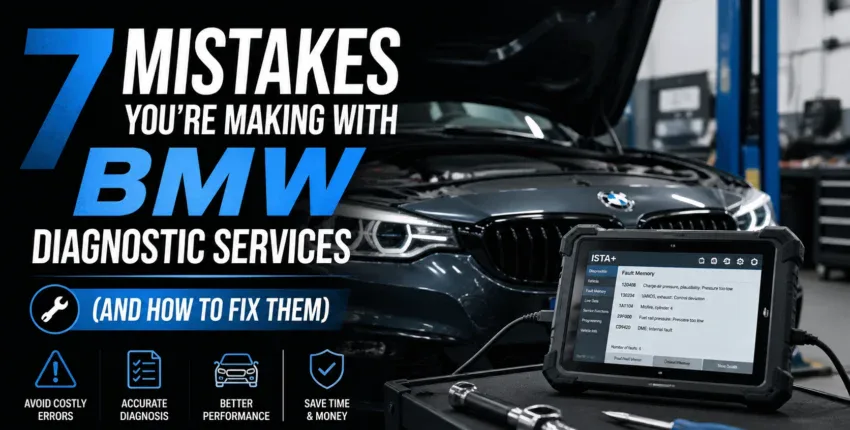
At MADA Autosport, we believe that an informed owner is a confident owner. Here are the seven most common mistakes BMW owners make regarding diagnostic services and the professional steps you can take to fix them.
1. Ignoring "Minor" Warning Lights
One of the most frequent mistakes is driving for weeks or months with a "Check Engine" or "Service Required" light illuminated. In Vancouver’s varied climate, where moisture and temperature fluctuations can impact sensitive electronics, ignoring an early warning is a gamble you shouldn’t take.
The Mistake: Assuming that because the car "feels fine," the light is just a glitch or a non-essential sensor issue. Many owners avoid diagnostics to save on the immediate fee, which typically ranges from $150 to $200.
The Fix: Treat every warning light as a crucial data point. Modern BMWs utilize complex onboard diagnostics to alert you before a minor fault turns into a catastrophic failure. Addressing a sensor fault early can prevent your engine from entering "Limp Mode" or causing long-term damage to emissions components.

2. Relying on Generic OBD-II Scanners
In the age of DIY, many enthusiasts purchase $30 scanners from the internet. While these tools are fine for clearing a basic gas cap code, they are woefully inadequate for a vehicle as complex as a BMW.
The Mistake: Trusting a generic scanner to provide a full picture of your car's health. These tools only access basic emissions-related data and cannot communicate with the dozens of proprietary BMW control modules.
The Fix: Invest in professional-grade diagnostic services. At MADA Autosport, our BMW-trained technicians use dealership-level software that can perform deep-system scans. We don't just see a generic "P-code"; we see the specific BMW fault code, the "freeze frame" data (what the car was doing when the fault occurred), and the history of that specific module. For more complex issues, check out our guide on BMW electrical diagnosis.
3. Treating the Symptom Instead of the Root Cause
Perhaps the most expensive mistake is "parts-cannoning": the practice of replacing parts based on a hunch or a single code without a full diagnostic workup.
The Mistake: Replacing a spark plug because of a misfire code, only to find out the issue was actually a leaking fuel injector or a faulty ignition coil driver in the ECU. This leads to wasted money and continued frustration.
The Fix: Follow a systematic diagnostic path. A professional diagnostic service at MADA Autosport involves verifying the fault, testing the circuit or component, and ensuring the root cause is addressed. This meticulous approach is an essential investment that safeguards your vehicle's value. Understanding common BMW repair issues can help you stay ahead of these common pitfalls.
4. Skipping Preventative Diagnostic Scans
Most owners only seek diagnostics when a light appears on the dashboard. However, by the time a light is on, the problem has already manifested.
The Mistake: Viewing diagnostics only as a reactive measure rather than a preventative tool.
The Fix: Incorporate diagnostic "health checks" into your regular maintenance schedule. For example, a cam-crank correlation scan around the 60,000-mile (100,000 km) mark can detect early signs of timing chain stretch: a known issue in certain BMW engines. Catching this early can save you upwards of $4,000 in engine repairs. We recommend reviewing our vehicle inspection checklist to see what a comprehensive evaluation should look like.

5. Overlooking Battery and Electrical Health
Your BMW is essentially a rolling supercomputer. Almost every mechanical function is governed or monitored by an electrical component.
The Mistake: Neglecting the state of the battery and alternator during the diagnostic process. Low voltage can cause a "cascading failure" of error codes across multiple systems that aren't actually broken. Furthermore, many owners fail to "register" a new battery, which is a critical diagnostic step.
The Fix: Ensure your diagnostic tech performs a battery and charging system test first. If you replace your battery, it must be registered with the vehicle’s power management system so the alternator knows how to charge it correctly. Failure to do this will significantly shorten the life of your new battery and may cause phantom electrical issues.
6. Assuming the Dealership is the Only Option for Coding
Many BMW owners in Vancouver feel trapped into paying high dealership labor rates for advanced diagnostic and coding services, believing that independent shops lack the technology.
The Mistake: Paying "premium" dealership prices for services that a specialized independent shop can perform with the same: or better: precision.
The Fix: Seek out a specialized BMW repair shop. MADA Autosport offers dealership-quality diagnostics and BMW ECU cloning at a significantly more accessible price point. Our technicians are BMW-trained and use the same specialized tools found in the service bays of major retailers, providing you with peace of mind without the "dealership tax."

7. Choosing a Generalist Mechanic Over a Specialist
A general mechanic who works on everything from Hondas to Fords may be excellent at basic repairs, but a BMW requires specialized knowledge of its unique architecture.
The Mistake: Taking your BMW to a generalist who doesn't understand the specific nuances of VANOS systems, Valvetronic motors, or BMW’s proprietary communication protocols (like MOST or CAN-bus).
The Fix: Find a trusted specialist. A technician who spends their entire day working on the BMW platform will recognize patterns and common failure points that a generalist might spend hours trying to find. This efficiency saves you money on labor. When looking for help, knowing how to find a trusted BMW specialist is half the battle.
Why Professional Diagnostics Are a Vital Investment
Your BMW is a high-performance machine that requires a meticulous approach to maintenance. Diagnostic services shouldn't be viewed as a chore or an unwelcome expense; they are a vital investment in your car's longevity and performance. By avoiding these seven mistakes, you ensure that your vehicle remains the "Ultimate Driving Machine" it was designed to be.
At MADA Autosport, we combine technical expertise with a passion for the BMW brand. Our diagnostic process is transparent, thorough, and designed to get you back on the Vancouver roads with total confidence.
Ready to give your BMW the expert attention it deserves?
Whether you have a persistent warning light or simply want a preventative health check, our team is here to help.
[Book Your BMW Diagnostic Service at MADA Autosport Today]